Osteoporosis
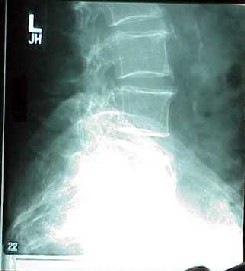
DEFINITION
Osteoporosis is the progressive thinning of the bones that
takes place when new bone formation does not keep up with bone removal, leaving
the bone progressively brittle. As bone is lost, the skeleton continues to have
a normal composition, but it becomes porous, hyper-mineralized and more fragile,
leading to spinal deformities (dowager's hump) and painful fractures of the
wrist, hip and spine.
GENERAL INFORMATION
According to the National Osteoporosis Foundation, one in two women over the
age of 50, and one in eight men, will experience an osteoporosis-related
fracture. Osteoporosis is a debilitating disease characterized by low bone mass
and deteriorating bone tissue that affects tens of millions of Americans and
causes 1.5 million fractures annually. The annual cost of treatment totals more
than $10 billion. While some people suffering from osteoporosis experience
recurring back pain, loss of height, and spinal deformities, many don’t even
know they have the disease until a bone fracture occurs.
More than three-fourths of postmenopausal women over age 55 do not receive any
evaluation or treatment for osteoporosis after suffering a wrist fracture,
despite a 90% chance that they have progressive thinning of the bones, says a
study from the University of Pennsylvania Medical School that evaluated managed
care data bases from thirty U.S. states.
COMMON CAUSES
-Nutrient deficiencies
Minerals, especially magnesium
Vitamins D and K
-Insufficient exercise
-Smoking
-Glucocorticoid (steroid drug) use
ASSESSMENT
1) Bone mineral density (BMD) testing is an important and accurate measure of the current
status of ones bones. This testing is widely available. Dr. Young can order this
for his patients.
2) Urinary bone resorption testing can provide information
about whether bone is currently being lost, and about whether a treatment
program for bone rebuilding is being effective. Again, Dr. Young can order this
testing. See the information below on this testing.
3) Vitamin D testing for 25-hydroxyvitamin D - all adults should have this
testing done periodically according to experts in the field.
4) Accurate mineral testing is critical. If you don't have sufficient mineral in
your body, how can you build bone? Don't assume that because you take calcium or
a multimineral that you have sufficient minerals in your body. There are a
number of ways of doing this testing.
a) Intracellular Mineral assessment by Analytical
Scanning Electron Microscope.
This test is covered by
Medicare. See info at: www.exatest.com
b) Functional intracellular mineral analysis. This test
is covered by Medicare. For info see:
www.spectracell.com
The following information in brown text is taken from the
website of:
Great Smokies Diagnostic Laboratory on July 21, 2025
Bone Resorption Assessment
http://www.gsdl.com/assessments/finddisease/osteoporosis/bone_resorption.html
For years, researchers have looked for biochemical methods to determine bone
loss rates associated with the development of osteoporosis.1
The Bone Resorption Assessment focuses on two collagen crosslinks with greater
specificity for bone resorption, pyridinium (Pyd) and deoxypyridinium (D-Pyd).
Research supports the use of Pyd and D-Pyd as excellent, sensitive and specific
indicators of bone loss due to osteoporosis.2,3
Presence in the urine of higher than normal amounts of Pyd and D-Pyd indicate a
rapid rate of bone loss.4-6 A high rate of bone
turnover in an untreated postmenopausal woman indicates that bone loss is likely
to be rapid.
Nearly all women will show high bone turnover in the first few years after
menopause, but about a third will continue to have high turnover 10-20 years
after menopause. Many clinicians believe such women are destined to suffer
extensive bone loss and should be targeted for aggressive therapy to block bone
resorption.7
Many studies have investigated the relationship of pyridinium markers to
osteoporosis. In one, the urinary excretion of Pyd crosslinks was evaluated in a
group of elderly women with untreated osteoporosis.5
The crosslinks relative to creatinine correlated closely with bone resorption
with osteocalcin, a specific marker of bone formation and osteoporosis. In
another study, elderly women with femoral fractures associated with osteoporosis
were compared with age-matched controls.6 Women
with fractures and osteoporosis excreted higher levels of crosslinks. Patients
with recent fractures showed higher excretion of both markers than those without
recent fractures, indicating that accidental bone fractures also increase
crosslink excretion.
Although exercise is an important element in guarding against bone loss, many
physicians are noticing an increase in the early onset of bone loss in
premenopausal women who exercise vigorously while maintaining extremely low-fat
diets.
The Bone Resorption Assessment is a simple, direct urinary assay of
pyridinium and deoxypyridinium crosslinks, useful in identifying early onset of
rapid bone loss, allowing for timely intervention and effective monitoring of
bone support therapies.
References:
1 Azria M. Calcif Tissue Int.1989;45:7-11.
2 Hassager C et al. Clin Endocrinology 1992;37:45-50.
3 Delmas PD. Bone 1992;13:S17-21.
4 Uebelhart D et al. Bone Miner 1990; 8:87-96.
5 Delmas PD et al. J Bone Min Res 1991;6(6):639-44.
6 McLaren AM et al. Ann Rheum Dis 1992;51:648-51.
7 Ettinger B. Current Opinion OB GYN 1993;5:396-403.
TREATMENTS
-Supplementation with nutrients that have been shown to be beneficial
Multimineral
Vitamin D
Vitamin K
Omega-3 oils (fish and flax)
Magnesium: 500 mg per day until age 50; 600 mg per day after
age 50
Trace minerals zinc, copper and manganese, silicon, boron
-Weightbearing exercise
-Reduce consumption of animal protein (dairy and meat)
AREAS OF CONFUSION
Are Dairy Products Important for Healthy Bones?
The well-known Nurses’ Health Study of 1997 reported that older women who
drank two or more glasses of milk a day had no greater protection from hip or
forearm fracture than women who drank one glass or less a week. "High milk
intake and better bones is not well-established," said Dr. Meir Stampfer,
professor of epidemiology and nutrition at the Harvard School of Public Health,
and one of the researchers involved in the Nurses’ Health Study. "And I’m not
convinced that the data are really strong enough to support the very vigorous
type of pro-milk campaign" that is now being promoted.
"It is hard to turn on the television without hearing
commercials suggesting that milk promotes strong bones. The commercials do not
point out that only 30 percent of milk’s calcium is absorbed by the body or that
osteoporosis is common among milk drinkers. Nor do they help you correct the
real causes of bone loss." ~ Dr. Neal Barnard, founder PCRM,
www.pcrm.org
DRUG TREATMENT
Individuals with osteoporosis should have proper
assessment of the mineral levels in their body (not just calcium) and become
informed about the condition and its treatment so they can make an educated
choice about the use of drugs.
WHAT TO READ
The Truth About Osteoporosis
by John Lee, MD you can read it at:
http://www.johnleemd.com/trutabos.html#top |